
Blown-In Insulation Services in NYC
Retrofit Wall & Attic Insulation for Existing Buildings – Without Major Construction
Adding insulation to existing walls and attics doesn’t require tearing apart your building. Our blown-in insulation services deliver energy savings and comfort to older NYC buildings with minimal disruption to tenants and property owners.
As National Grid and Con Edison approved contractors, we help NYC homeowners and businesses save up to 75% on installation costs through utility rebates.
What Is Blown-In Insulation?
Blown-in insulation is a method of installing loose-fill insulation material into enclosed wall cavities and attic spaces using specialized equipment. Unlike traditional batt insulation that requires opening walls, blown-in insulation can be installed through small access points — making it the ideal solution for retrofitting existing NYC buildings.
We install two types of blown-in material and recommend the best option based on your project:
Blown-In Cellulose Insulation
Blown-In Fiberglass
Our Two Core Blown-In Services
1. Wall Cavity Fill (Drill & Fill Method)
Our Process:

Assessment
We inspect your walls to confirm cavity depth and identify any obstructions (wiring, plumbing, fire stops)

Strategic Drilling
We drill 4-inch access holes every 16 inches along the wall, typically at the top of each stud bay

Dense Pack Installation
Using professional equipment, we blow cellulose or fiberglass into the cavity at the proper density to prevent settling

Seal & Finish
All holes are plugged and patched to match your existing wall surface
Perfect for: Older homes, brownstones, row houses, and multi-family buildings with uninsulated exterior walls.
- No wall demolition required
- Typically completed in one day for most homes
- Fills every gap, void, and irregular space that batt insulation would miss
- Adds significant soundproofing between rooms and from outside noise
- Immediately noticeable comfort improvement
Flat Roof Attic Insulation
NYC’s flat-roofed buildings often have attic spaces that are impossible to access through traditional means. We specialize in insulating these challenging spaces using two proven access methods:
1. Roof Access Method
We cut a 2×2 foot opening in the roof membrane, blow insulation throughout the attic cavity, then professionally reseal the roof. This method is ideal for buildings where ceiling access isn’t practical or when you want to insulate the entire building in one project.
2. Ceiling Access Method
For multi-family buildings, we can access the attic space through ceiling penetrations in top-floor units or common areas. This approach allows us to insulate an entire building without entering individual apartments — a major advantage for landlords and property managers who don’t want to disturb tenants.
- Reaches spaces that are otherwise inaccessible
- Complete coverage of irregular joist bays and obstacles
- Minimal disruption to building occupants
- Significant reduction in heat loss through the roof
- Often qualifies for utility rebates covering 50%+ of the cost
Multi-Family Building Advantage:
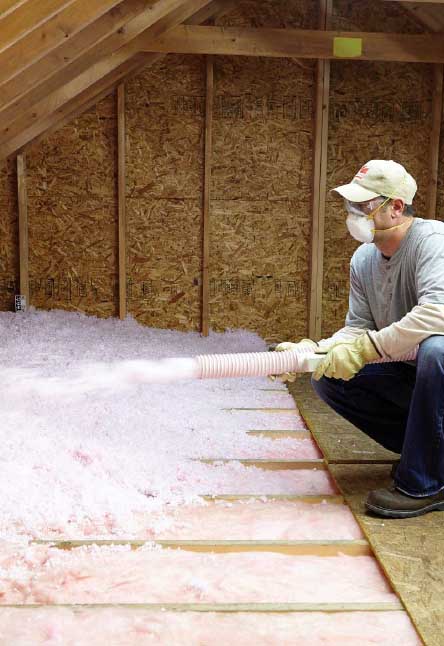
Cellulose vs. Fiberglass: Which Is Right for Your Project?
Both materials deliver excellent thermal performance and qualify for utility rebates. The right choice depends on your building type, budget, and priorities.
| Factor | Cellulose | Fiberglass |
|---|---|---|
| Material | Recycled paper fiber treated with borate | Spun glass fibers |
| R-Value | R-3.7 per inch ✓ | R-2.5 per inch |
| Soundproofing | Excellent — denser material ✓ | Good |
| Moisture | Can absorb moisture | Moisture resistant ✓ |
| Settling | May settle 1-2% over time | Does not settle ✓ |
| Fire Resistance | Class 1 fire rated | Non-combustible ✓ |
| Eco-Friendly | 85% recycled content ✓ | Made from sand |
| Best For | Residential retrofits, soundproofing, eco-projects | Basements, moisture-prone areas, commercial |
| Our Product | Sanctuary by Greenfiber | Professional-grade loose-fill |
Not sure which material is right for your building? That’s what we’re here for. We assess every project individually and recommend the solution that makes the most sense – sometimes that’s cellulose, sometimes fiberglass, and sometimes a combination in different areas of the building.
Ideal Buildings for Blown-In Insulation in NYC
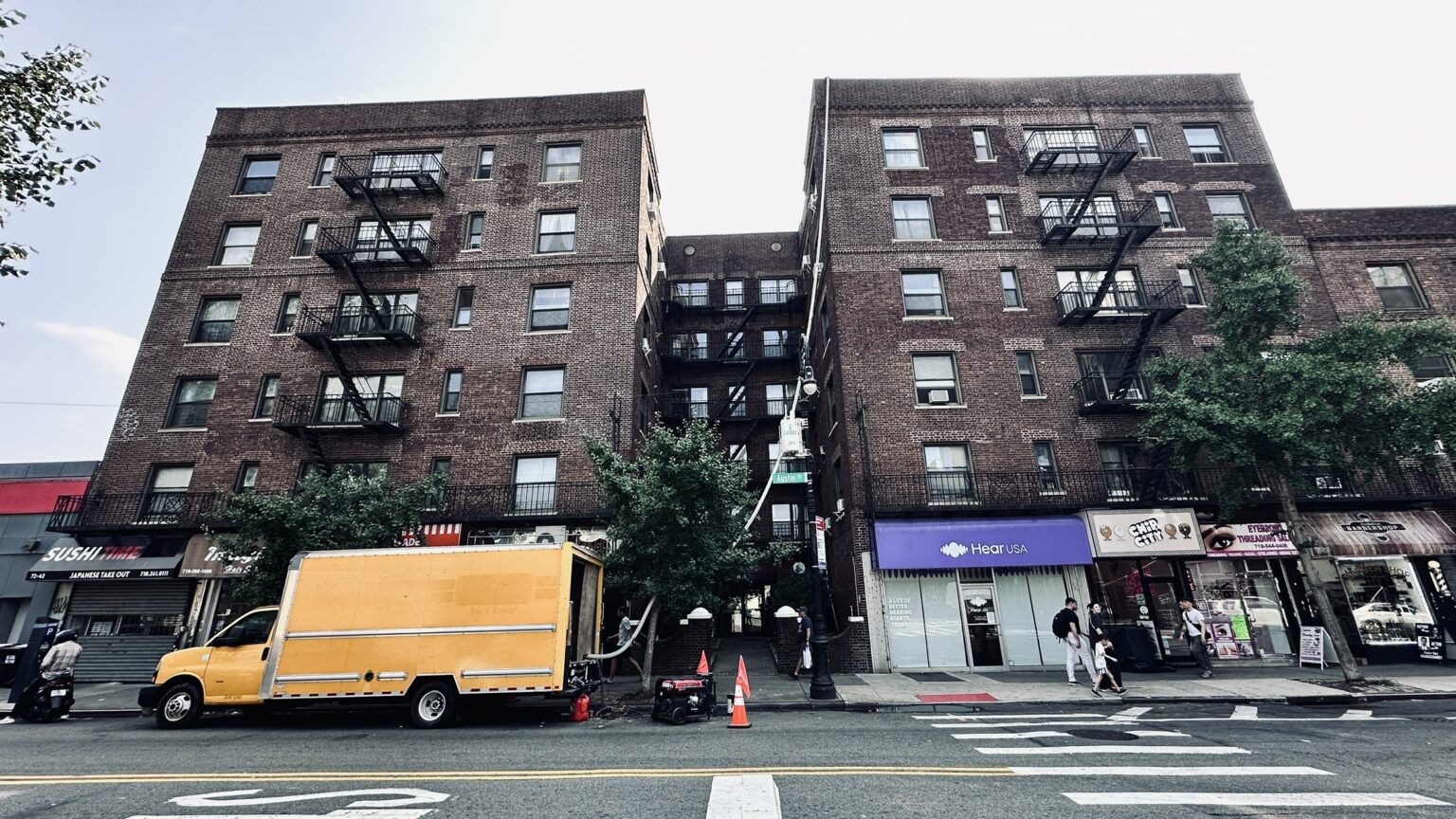
Blown-in insulation works best when opening walls isn’t practical.
If your building fits any of these descriptions, you’re a great candidate:
Pre-War Buildings (Pre-1940)
Brick or stone exteriors with empty wall cavities. These buildings benefit dramatically from wall cavity fill - we typically recommend cellulose for its superior soundproofing.
Multi-Family Residential
Row houses, brownstones, and small apartment buildings. Roof-access attic insulation lets us insulate entire buildings without entering individual units. Cellulose or fiberglass depending on attic conditions.
Commercial Buildings
Warehouses, offices, and retail spaces often need moisture-resistant solutions. We typically recommend fiberglass for commercial applications where humidity or moisture is a concern.
Post-War Walk-Ups (1940s-1970s)
Many have hollow block or frame walls that were never insulated. Our drill & fill method targets just the exterior walls you need — material choice depends on building conditions.
Frequently Asked Questions
How long does blown-in insulation installation take?
Most residential projects are completed in a single day. Larger multi-family buildings may take 2-3 days depending on the scope. We’ll give you a specific timeline during your estimate.
Will the drill holes be visible after installation?
We patch and finish all holes to match your existing wall surface. On interior walls, the patches can be painted to blend seamlessly. On exterior siding, we use plugs that match the original material.
Does blown-in insulation settle over time
When installed at the proper density (which we verify during installation), cellulose may settle 1-2% but maintains its R-value. Fiberglass doesn’t settle at all. Both materials are designed for permanent performance.
Can you insulate just the exterior walls, or do I need to do interior walls too?
Exterior walls are the priority for energy savings since they’re your thermal boundary. Interior walls don’t need insulation for energy purposes, but some customers choose to insulate them for soundproofing between rooms.
Is blown-in insulation safe?
Yes. Cellulose is treated with borate, which is non-toxic to humans and pets but provides fire resistance and pest deterrence. Fiberglass is inert and non-combustible. Both materials are safe for occupied buildings.
How do I know if my walls are already insulated?
We check during our assessment. Common signs of uninsulated walls include: walls that feel cold to the touch in winter, significant temperature differences between rooms, and high heating/cooling bills. We can also use thermal imaging to identify problem areas.
Do I need to be home during installation?
For interior wall work, yes – we need access inside. For flat roof attic insulation done from the roof, you don’t need to be present, though we recommend someone be available for final walkthrough.
What's the difference between cellulose and fiberglass blown-in?
Both are excellent choices. Cellulose is denser, provides better soundproofing, and is more environmentally friendly. Fiberglass is lighter, won’t absorb moisture, and is preferred in certain applications. We’ll recommend the best option for your building.
HOW DO YOU DECIDE BETWEEN CELLULOSE AND FIBERGLASS?
During our assessment, we evaluate your building’s construction, moisture conditions, soundproofing needs, and your priorities. For most residential retrofits and multi-family buildings, we recommend cellulose for its superior soundproofing and eco-friendly properties. For basements, areas with moisture concerns, or commercial applications, fiberglass is often the better choice. We’ll explain our recommendation and give you options.